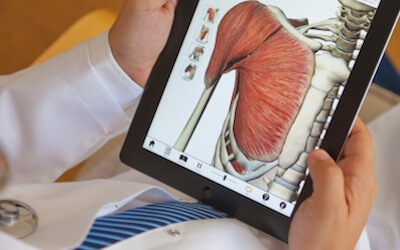
These are PDA software packages designed specificially for the
medical profession. We've broken the types of handheld medical
software packages into 5 categories:
1. House Staff and Medical Student PDA programs.
These are customized medical PDA solutions for house staff
and medical students. Several companies have integrated PDA
programs for patient tracking, PDR-type pharmacy references,
and general medical and surgical references.
The most widely used medical PDA packages include:
Tarascon
Pharmacopoeia - one of the best pharmacology references
for the PDA, includes dosing, interaction and even pricing information.
Medical
PDA recommendations - these packages require a lot of
processing power and memory from your PDA, so you should choose
your PDA carefully. In this article two PDA's are reviewed, each
functions well and they in the low- to mid-price range.
Epocrates
- the most popular free medical software package among US medical
students.
2. Free Medical PDA Downloads.
A sampling of the free pda packages you can download include:
ARTbeat
- current medical news Archimedes
- medical calculator Diagnosaurus
- helps build differential diagnosis list; produced by McGraw-Hill
medical publishing and specifically designed for medical students
3. Nursing Software
A variety of Nursing PDA Software packages - and online options
- have come to market over the last 5 years. We've put together
a discussion of some of the best:
These include medical
dictionaries, the Washington
Manual, and general medical references. The large memory
capacity of contemporary PDAs allows a tremendous amount of
reference material to be packed into a small container - so
the pockets of medical student's lab coat no longer need to
look like chipmunk cheeks stuffed with nuts. The peripheral
brain has worked its way out of notecards and mini-books and
into medical PDA software. We have partnered with USBMIS,
Pepid and Skyscape
to bring a full range of medical PDA packages to students and
physicians alike.
5. Medical Software for offices and medical practices.
EMR
software has been identified as major priority for improving
both efficiency in the US healthcare system as well as reducing
medical errors. As of October 2007, a small number of physician
practices will be offered enhanced medicare payments in exchange
for adopting EMR
in their practices.
The largest body of medical software is medical
billing software. Designed for use as medical
office software, these packages are generally not meant
for handheld devices - although a few integrated into palm
medical software. The variety of tools available including
medical coding connected to most major
medical insurance companies, as well as patient scheduling
and medical billing. These are usually very expensive packages,
but like medical PDA software, they substantially improve productivity
for the small and medium sized medical practice.
Electronic
m edical records software are separate packages - it's often
easier to comply with HIPPA regulations with separate medical
records software and medical
practice software. Such packages usually contain medical records,
physician orders and notes, as well as nurses notes. The two biggest
potential benefits for digital medical records, of course, is
having a portable, easily accessed medical record, which should
reduce delays in treatment and diagnosis, and having a legible,
consistent record format, which should reduce medical errors.